
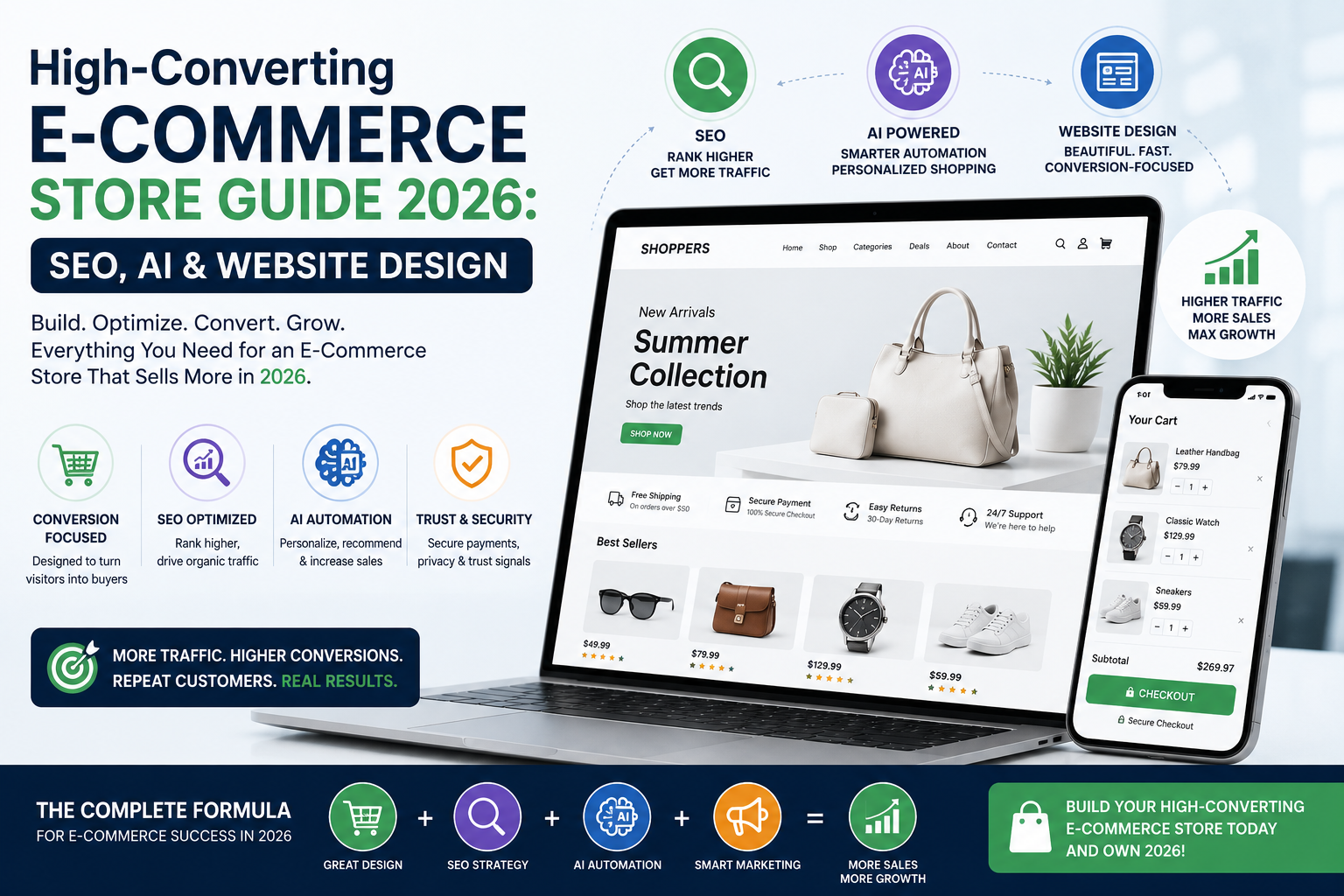
How to Build a High-Converting E-Commerce Store: Website Design, SEO, and AI Strategies That Drive Sales
Launching an e-commerce store in 2026 is easier than ever, but building a store that actually converts visitors into customers is the real challenge. Many US businesses invest in online stores but fail to generate consistent sales because they focus only on design, not performance, search visibility, or automation.
A successful high-converting e-commerce store requires a strategic combination of website design, SEO, and AI-powered optimization. When these elements work together, businesses can attract qualified traffic, improve user experience, and increase revenue without continuously raising advertising budgets.
This guide explains how to build an e-commerce store that drives sales and scales efficiently in the competitive US market.
What Makes an E-Commerce Store High-Converting?
A high-converting store is not just visually appealing, it is engineered to guide visitors toward making a purchase.
Key characteristics include:
- Fast loading speed
- Mobile-optimized design
- Clear product presentation
- Trust-building elements
- Strong calls-to-action
- Smooth checkout process
- SEO-friendly structure
In simple terms, a high-converting store removes friction from the buying journey.
Step 1: Website Design That Focuses on Conversions
Your website design directly influences customer behavior.
In e-commerce, design is not about decoration, it is about psychology and usability.
Clean and Simple Layout
A cluttered website confuses users. Instead, focus on:
- Minimal navigation
- Clear categories
- Easy product discovery
- Visible search bar
The goal is to help users find products quickly.
Mobile-First Design
More than half of online shopping happens on mobile devices.
A mobile-friendly store should include:
- Responsive product grids
- Easy-to-tap buttons
- Simplified checkout flow
- Fast image loading
If the mobile experience is poor, conversions drop significantly.
High-Quality Product Pages
Product pages are where buying decisions happen.
Strong product pages include:
- Clear product images
- Detailed descriptions
- Pricing transparency
- Customer reviews
- Shipping and return details
These elements build trust and reduce hesitation.
Step 2: SEO for E-Commerce Growth
Without SEO, even the best-designed store struggles to get traffic.
Search Engine Optimization (SEO) helps your store appear in Google search results when customers are actively looking to buy.
Keyword Optimization for Products
Every product should target search intent keywords like:
- Buy organic skincare online in the USA
- best running shoes for men 2026
- affordable smart home devices
This ensures you attract buyers, not just visitors.
Category Page Optimization
Category pages often generate more traffic than product pages.
Optimize them by:
- Adding keyword-rich descriptions
- Structuring internal links
- Using clean URLs
- Including FAQs
This improves rankings and user navigation.
Technical SEO for Stores
Technical SEO ensures search engines can properly index your store.
Important elements include:
- site speed optimization
- structured data for products
- XML sitemaps
- secure HTTPS connection
- crawlable architecture
A technically strong store performs better in search rankings.
Step 3: AI Strategies That Boost Sales
Artificial intelligence is transforming e-commerce performance.
Modern AI strategies help businesses understand customers, personalize experiences, and automate operations.
AI Product Recommendations
AI systems analyze customer behavior and suggest relevant products, such as:
- “Frequently bought together” items
- “Recommended for you” suggestions
- Personalized bundles
This increases average order value.
AI Chatbots for Sales Support
AI chatbots help customers instantly by:
- answering product questions
- guiding purchase decisions
- resolving checkout issues
- providing 24/7 support
This reduces cart abandonment.
AI-Powered Pricing and Inventory
AI can:
- Predict demand trends
- Adjust pricing dynamically
- Prevent stock shortages
- Optimize inventory levels
This improves profitability and efficiency.
Step 4: Conversion Optimization Strategies
Traffic alone is not enough; conversion optimization turns visitors into buyers.
Trust Signals
Customers need reassurance before purchasing.
Add:
- secure payment badges
- return policies
- customer reviews
- testimonials
- guarantees
Trust increases conversion rates significantly.
Fast Checkout Experience
A complicated checkout process causes cart abandonment.
Improve checkout by:
- reducing steps
- offering guest checkout
- supporting multiple payment methods
- auto-filling forms
Simplicity increases completed purchases.
Strong Call-to-Actions (CTAs)
Effective CTAs guide users toward action.
Examples:
- “Add to Cart”
- “Buy Now”
- “Get Yours Today”
CTAs should be visible and consistent across the store.
Step 5: Digital Marketing to Drive Targeted Traffic
Even a perfect store needs visibility.
Digital marketing helps attract qualified buyers.
Social Media Advertising
Platforms like Facebook, Instagram, and TikTok help:
- promote products
- target specific audiences
- retarget visitors
- build brand awareness
Email Marketing Automation
Email marketing helps recover lost sales through:
- abandoned cart emails
- product recommendations
- discount campaigns
- loyalty programs
Paid Search Campaigns
Google Ads can drive high-intent traffic from users actively searching for products.
Step 6: Data Tracking and Continuous Improvement
Successful e-commerce stores are constantly optimized.
Track key metrics such as:
- conversion rate
- average order value
- bounce rate
- cart abandonment rate
- customer lifetime value
Data helps identify what is working and what needs improvement.
Common Mistakes in E-Commerce Development
Many businesses fail due to avoidable issues:
- ignoring mobile users
- poor product descriptions
- slow website performance
- weak SEO strategy
- lack of trust signals
- no remarketing strategy
Avoiding these mistakes significantly improves success chances.
How AI, SEO, and Website Design Work Together
The most successful e-commerce systems integrate all three:
- Website design attracts and engages users
- SEO brings organic traffic
- AI improves personalization and conversions
Together, they create a scalable sales engine.
Learn More About AI-Powered Business Growth
If you want to understand how AI can improve business efficiency and reduce operational costs beyond e-commerce, read this guide:
Related Article:
The Complete Guide to AI Automation for US Businesses: Increase Productivity and Reduce Costs in 2026
This article explains how AI transforms business operations across industries.
Final Thoughts
Building a high-converting e-commerce store requires more than just launching a website. It requires a strategic combination of website design, SEO, AI automation, and digital marketing.
Businesses that focus on user experience, search visibility, and intelligent automation are far more likely to succeed in today’s competitive US e-commerce landscape.
In 2026, winning e-commerce brands are not just selling products; they are building optimized digital ecosystems that continuously attract, engage, and convert customers.

